Featured News
What Rev. Jackson Taught Me About Economic Power
As we mourn the passing of Rev. Jesse Jackson, I find myself reflecting not just on the marches, the speeches, or the presidential campaigns — but on the boardrooms.
Long before diversity statements were fashionable and inclusion became a corporate slogan, Rev. Jackson was negotiating inside America's economic power centers. Through the Wall Street Project and Rainbow PUSH, he pressed corporations for contracts, procurement opportunities, advertising dollars, deposits, and access to capital.
He was not asking for symbolism. He was negotiating ownership. He understood something many still miss: in America, respect ultimately flows through economic structures. We used to call it silver rights. Civil rights opened doors. Silver rights determine who has equity inside the building.
Rainbow PUSH was never about narrow identity politics. It grew out of Operation Breadbasket and the Poor People’s Campaign. It was coalition economics. Rev. Jackson understood that when economic power concentrates, inequality expands across race lines. His strategy was not division. It was leverage. He believed in bringing numbers into the room, not noise.
That philosophy shaped me.
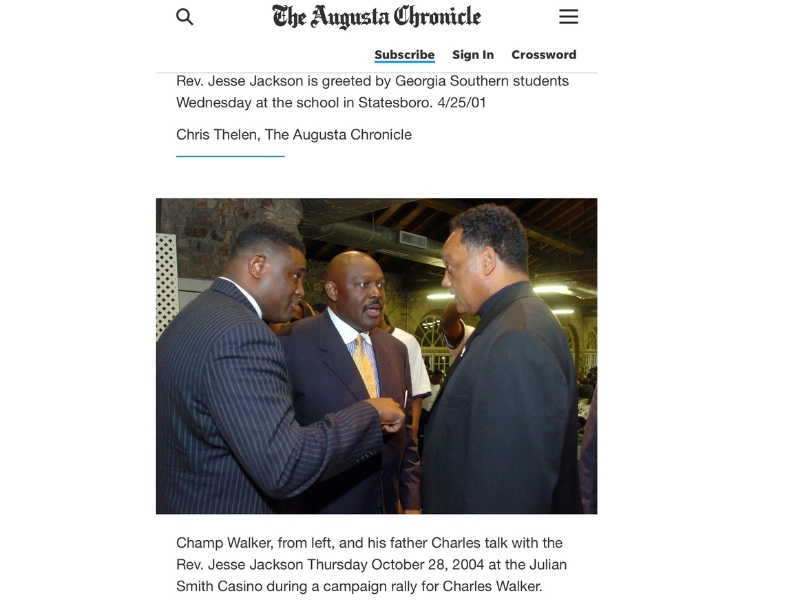
Photo Credit: Charles Walker
In 1988, while still in college, I launched Young Entrepreneurs & Associates so one phone call could connect people to over 150 Black-owned businesses. Decades later, after the murder of George Floyd and years of collaboration with civil rights leaders, we built Friends of the Movement (FotM), a conscious spending platform designed around infrastructure, not outrage.
Rev. Jackson taught me that sustainable change must be strategic and surgical. Emotional moments move people. Structural leverage moves markets.
Today the nation debates DEI policies as if they are the centerpiece of justice. But policies can be scaled back, rebranded, or eliminated depending on politics and corporate comfort.
Return on investment cannot be casually eliminated. ROI is how boards think. It is how executives justify strategy. It is how markets respond. Black buying power in the United States approaches $2 trillion annually. Ally spending aligned with fairness and conscious commerce represents roughly $5.3 trillion more. Together, that is nearly $7 trillion in potential coordinated economic influence. Seven trillion dollars is not symbolic. It is structural.
Photo Credit: Charles Walker
Yet fewer than 200,000 majority Black-owned employer firms operate nationwide. Supplier diversity often remains in the low single digits. Venture capital flowing to Black founders remains a fraction of total funding.
The imbalance is historical. Education denied. Property restricted. Capital inaccessible.
We built America, but were blocked from owning it. And whenever we achieved meaningful gains — from Tulsa’s Black Wall Street to thriving districts across the country — resistance followed. Too often, our dollars were welcomed while our ownership was resisted.
Today, we remain one of the largest consumer segments in the country. If Black American spending were measured as a standalone economy, it would rank among the top 15 in the world. Yet we remain underrepresented as producers. That imbalance, when organized, becomes leverage. We saw glimpses of that leverage when corporations faced coordinated consumer responses tied to economic justice commitments. Attention can be mobilized quickly. Messaging can reach tens of millions. Consumer behavior can shift.
But Rev. Jackson understood something deeper: mobilization without infrastructure fades. We start strong. We operate in silos. We lack measurement. Momentum dissipates. People do not lose conviction. They lose systems.
That is why the next evolution of economic justice must be digital, behavioral, and data-driven. The Black Wall Street Ticker, and platforms like it, are modern extensions of what Rev. Jackson pioneered. They aggregate spending patterns to demonstrate coordinated economic movement. They turn values into measurable signals. They transform emotion into leverage.
Photo Credit: Charles Walker
This is not protest for protest’s sake. It is disciplined market engagement.
The Corporate Friendship model builds on a simple principle: if a company profits from a community, what is the measurable return? Procurement. Advertising. Capital access. Supplier contracts. Career ladders. Friendship is not declared. It is demonstrated.
Consumers register. Merchants register. Data aggregates. Leverage forms.
This is coordination, not chaos.
Rev. Jesse Jackson’s legacy was never about symbolism. It was about accountability in the language of economics. He taught us that justice must move beyond access toward ownership. Beyond rhetoric toward measurement. Beyond visibility toward equity. Civil rights opened doors. Silver rights determine ownership.
As we honor his life, the greatest tribute we can offer is not nostalgia. It is a continuation. Build infrastructure. Translate values into measurable economic behavior. Engage markets with discipline. That is what he taught me. And that is how markets change.
Our Money United
@fotmglobal FotM Global has created a revolutionary conscious consumption platform and blue print to close the racial wealth gap for black America! Take the Pledge TODAY!#ourmoneyunited ##blackwallstreet #votewithwallet #fotM ♬ original sound - Friends of the Movement (FotM)
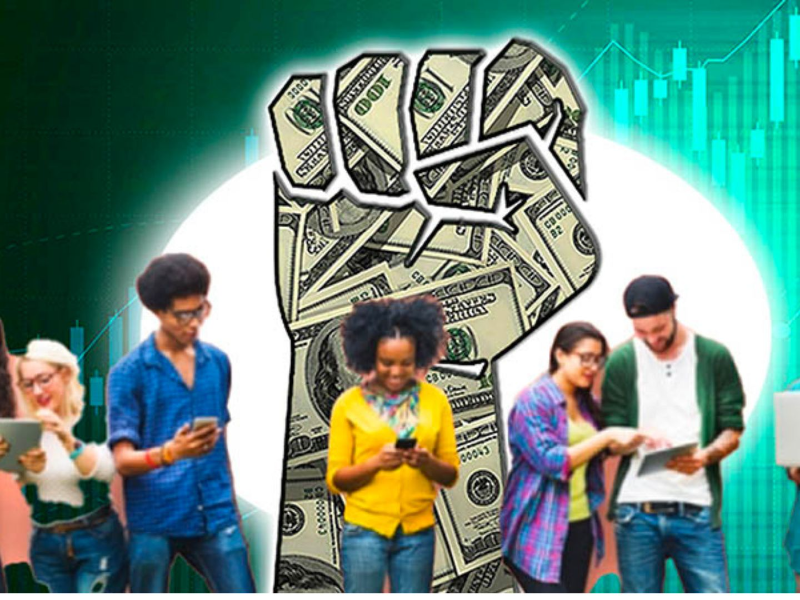
The Power of Dual Voting: America’s Path to Real Change
America is at a crossroads, facing challenges that have deep roots in its history—systemic injustice, economic inequality, and a growing divide among its people. While voting in elections has always been a cornerstone of democracy, history teaches us that real change requires more than just casting a ballot. It requires dual voting—a powerful combination of political participation and economic action.
Click Here to Register to Vote in the November 2024 Elections
The Historical Power of Economic Resistance
Throughout history, significant social and political shifts have been driven by the strategic use of economic power. During the American Revolution, colonists didn’t just fight on the battlefield; they also boycotted British goods, using their collective economic influence to challenge oppression. Fast forward to the Civil Rights Movement, and you see a similar strategy in action. The Montgomery Bus Boycott wasn’t just a protest—it was an economic stand that forced the system to change.
These examples show us that change is most effective when we use both our voices and our wallets. This is the essence of dual voting: making conscious choices not just in the voting booth, but every time we spend money.
Click to Purchase Merch and Show Your Support
Why Dual Voting Matters Today
In today’s world, the stakes are high. We’re dealing with corporations that have enormous influence over our political system, often pushing agendas that do not serve the public interest. This is where dual voting becomes crucial. By aligning our spending with our values, we can support businesses that contribute to a fairer society and withdraw our support from those that don’t.
Dual voting is not just a social justice tool—it’s an American issue. It’s about ensuring that our economic choices reflect the kind of society we want to build. When we vote with our dollars, we can push for the changes that voting alone might not achieve.
Building Conscious Communities
To make dual voting effective, we must cultivate conscious communities. This means educating ourselves and others about the impact of our spending habits and coming together to support businesses that align with our values. It’s about making sure that every dollar we spend is a vote for the kind of world we want to see.
Click Here To Learn More About Our Money United
The Call to Action
The power to create real change lies in our hands, but it requires action. We need to vote in every election, and we need to vote with our dollars every day. By embracing dual voting, we can challenge the status quo, hold corporations accountable, and drive the social and economic changes that America desperately needs.
America has never changed on its own. It’s time for us to take control of our future. Let’s make dual voting the force that transforms our society. The journey starts now—let’s build a better future together.
Empower Your Voice and Wallet: Participate in Dual Voting for Justice and Equality
In the wake of the most recent election, it’s clear that Black and Brown votes matter. But voting is only one part of the equation. History teaches us that change comes when people join forces, using both political and economic influence. Think of the colonists who boycotted British goods, or the Civil Rights leaders who used economic resistance to demand justice. These movements didn’t just rely on voting; they relied on the power of people coming together, strategically spending (or withholding) their money to create a world that reflected their values.
This is dual voting. Voting in every election is critical, but imagine the impact of aligning your spending with your values. Imagine what could happen if, instead of putting money into corporations that profit off the status quo, we redirected our $7 trillion in collective spending toward businesses that believe in social and economic justice. Think about that for a second—$7 trillion. That’s the power we’re sitting on, and if we choose to use it, there’s no telling what we could accomplish.
Click Link to Purchase
The Tools to Make It Happen
That’s why Friends of the Movement (FOTM) created tools like the Conscious Spending Ticker and the Voter Wallet as part of the Our Money United campaign. These aren’t just tools; they’re a way for us to wield our collective power like never before.
1. Conscious Spending Ticker: This ticker tracks every dollar spent with businesses that stand for social and economic justice, showing us in real-time the power of our spending. It’s a beacon that displays our shared commitment, permanently demonstrating that we—the people—are fueling the economy, and we’re choosing where that power goes.
2. Voter Wallet: The Voter Wallet is about putting power into the hands of everyday consumers. It’s a tool that helps you align your spending with your values, finding and supporting businesses that make a positive impact. This isn’t just about rewarding companies that “do no harm”—it’s about actively supporting businesses that do good, that contribute to the kind of society we want to live in.
With these tools, we’re organizing in a way that previous generations could only dream about. We’re making every dollar a vote for justice, equality, and opportunity. We’re building something bigger than any one person or one company. We’re building a movement.
Why Dual Voting Matters More Than Ever
The stakes today are higher than ever. We live in a world where corporations shape policies that impact our lives, often without regard for our well-being. But remember, there are more of us than there are of them. And when we unite around a shared agenda, we are unstoppable. We have the numbers, and we have the tools. What we need now is the will.
Dual voting—voting with our ballots and our dollars—gives us a way to hold corporations accountable, to show them that our money will only go to businesses that align with our values. This isn’t just about spending. It’s about power. And if we leave that power unused, we’re letting others decide our future for us.
A Call to Action: It’s Time to Organize
So here’s my call to you. Let’s stop sitting on this power. Let’s stop leaving our future in the hands of a few who only seek profit. Let’s vote twice. Let’s vote in every election, and then let’s vote every day, with every dollar we spend. Let’s make sure that our money supports businesses that want what we want: a society where justice and opportunity are for everyone.
We’re at a moment where we can either complain about the state of things or use the power we have to change it. The choice is ours. Are we going to sit back and let corporations decide our future? Or are we going to take control of our destiny, together, as a force they can’t ignore?
I’m inviting you to join the Our Money United campaign, to use the Conscious Spending Ticker and the Voter Wallet, and to become part of a movement that’s about more than spending—it’s about building the future we want. There’s no more time to waste. The journey to real change begins now, and it begins with us. Let’s vote twice, and let’s show the world what happens when the people take control of their own power.
Dr. Charles Walker Jr.
Founder, Chairman, & CEO
FotM Global Inc., https://fotmglobal.com